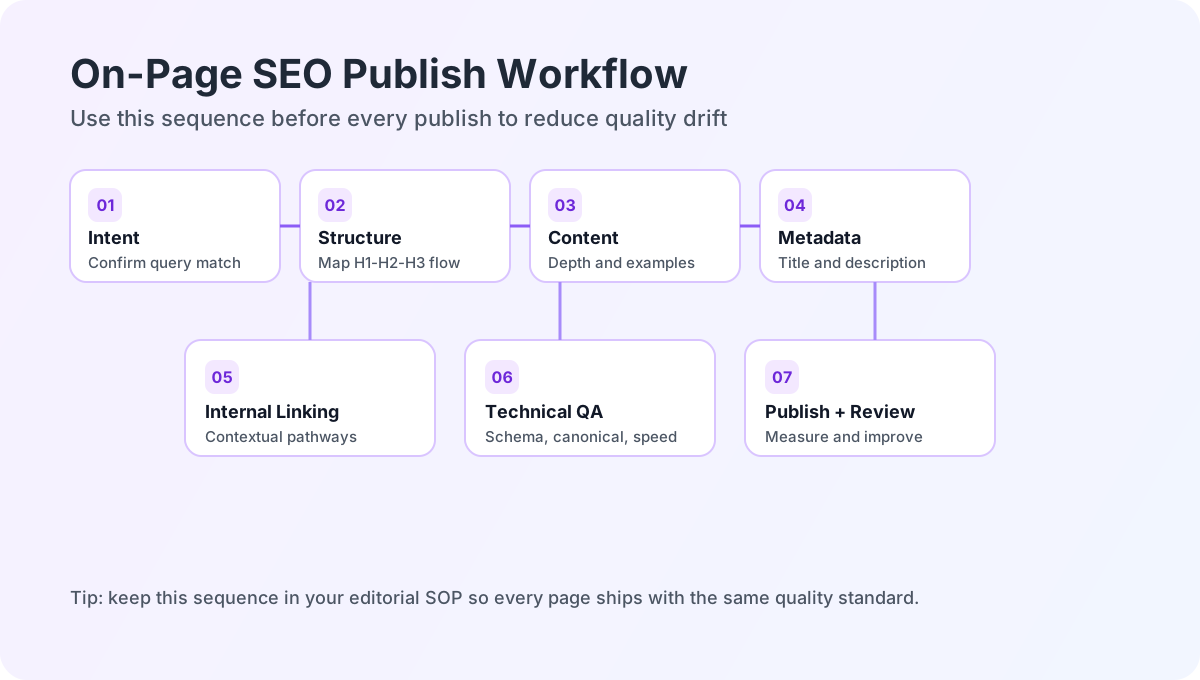
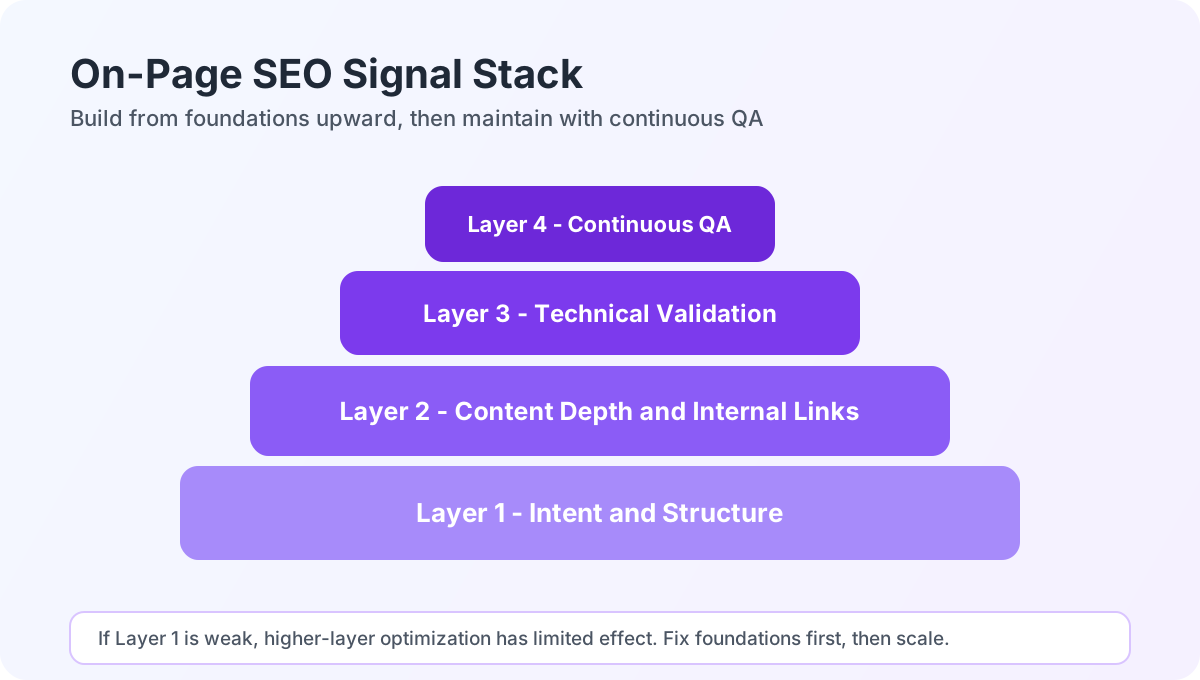
Control 1: Intent Drift Monitoring
Queries evolve. Pages that originally matched intent can drift as user language changes or SERP behavior shifts. Add a recurring review for top landing pages to detect drift early. Signals include rising impressions with declining CTR, more irrelevant query variants, and lower engagement quality despite stable positions.
When intent drift appears, update headline framing, intro, and section order before rewriting everything. Often, strategic repositioning of core sections is enough to realign with user need. Save full rewrites for pages where structure and scope are fundamentally wrong.
Control 2: Redundancy and Cannibalization Review
Large content libraries accumulate overlap. Two pages targeting near-identical intent can split authority and confuse engines. Run quarterly cluster reviews to identify overlaps, then merge, reposition, or differentiate pages clearly. Add canonical logic only when true duplicate intent and structure exist.
The cleaner approach is to define one primary page per intent cluster and use adjacent pages for complementary sub-intents. Internal linking should reinforce that architecture, not blur it.
Control 3: Editorial Consistency Guardrails
Inconsistent writing standards create uneven page quality. Build a living editorial standard that covers heading style, intro pattern, proof requirements, link behavior, and conversion placement. Add examples of both good and bad execution to shorten onboarding time for new writers.
During review, score drafts on clarity, usefulness, and trust quality, not just grammar. A technically clean but practically weak page is still weak SEO content. Consistency in practical usefulness is a major competitive advantage.
Control 4: Technical Regression Alerts
Many SEO losses happen from template or deployment changes, not content edits. Add periodic checks for canonical regressions, accidental noindex, broken structured data output, and major performance drops on core templates. This protects gains already earned by content quality work.
Keep regression response playbooks simple. Define who gets alerted, who verifies impact, and who owns rollback or fix deployment. Fast incident handling prevents small technical mistakes from turning into long-term ranking losses.